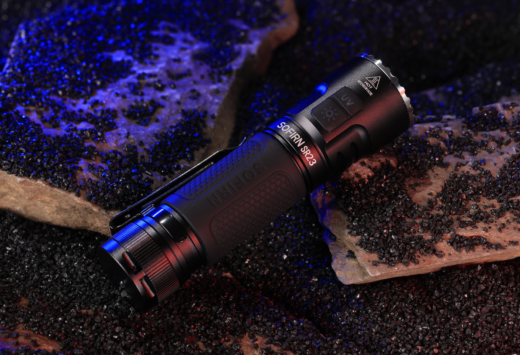
How to choose a UV torch
A UV torch (also sold as a blacklight torch or UV flashlight) makes certain materials fluoresce, so stains, residues, minerals and security features that are invisible in daylight show up as a glow. How well it works comes down to four things: the wavelength, whether the light is filtered, how much UV it actually puts out, and how it is powered.
365nm vs 395nm: the wavelength matters most
Most cheap blacklights use 395nm LEDs. That sits right at the edge of visible light, so the beam throws a strong purple glow that washes out the fluorescence you are trying to see. A 365nm torch sits well inside the UVA band and gives off very little visible light, so the target glows against a dark background with far better contrast.
For pet urine, scorpions, minerals, leak-detection dye and document checks, choose 365nm. A 395nm light is fine for charging glow-in-the-dark items, but it is the wrong tool for detection. We compare the two side by side in hardware-store black lights vs a real 365nm torch.
Filtered or unfiltered
Even a 365nm LED leaks some visible violet light. A filter lens, usually ZWB2 glass or a black UV-pass lens, blocks that visible spill and lets the UV through. The difference is obvious in use: a filtered torch looks almost dark, while the thing you are inspecting lights up.
The Convoy S12 UV (ZWB2 filter), Convoy S2+ UV (black filter glass), TANK007 UV-L03C and Weltool M4-365 are all filtered.
UV output: milliwatts, not lumens
Lumens measure visible light, so they tell you nothing about UV. Look for the UV output in milliwatts (mW) where the maker states it. A keyring light such as the Nitecore TIKI UV is rated at 1,000mW, which is plenty for checking banknotes, cards or a small patch of carpet. For sweeping a whole room, a subfloor or a rock face at night, more output and a wider beam cover ground faster. The Weltool M4-365 is rated at 14,000mW for that kind of large-area work.
Some keyring and multi-function torches carry only a small auxiliary UV LED of a few dozen milliwatts. That is handy for a quick check, but not for searching a room.
Batteries and charging
The UV torches in this range use one of three power set-ups:
- Removable 18650 or 21700 cells in the Convoy, TANK007 and Weltool M4-365 lights. Swapping in a charged spare takes seconds, which suits long inspections. Check whether a cell is included, and add spare batteries or a battery charger if you need them. Not sure which cell size suits you? Our 18650 vs 21700 battery guide explains the difference.
- Built-in rechargeable batteries in compact lights such as the Nitecore TIKI UV and the Fenix SW05R-UV cap light, which charge over USB.
- In-torch USB-C charging on most of the white-plus-UV multi-light torches. If charging convenience is the priority, browse our full range of rechargeable torches.
What people use UV torches for
Around the home
- Pet urine and hidden stains. Dried urine fluoresces under 365nm light, which makes it far easier to find the exact spot to treat. Our guide to finding cat urine with a UV torch covers the method room by room.
- Mould inspection. Some mould growth fluoresces under UV, which helps you spot areas worth a closer look. A glow is not a diagnosis, though. Read how to find mould with a UV torch for what it shows and what it doesn’t.
- UV resin. Many UV-curing resins set under light between about 365nm and 405nm, so a UV torch will cure small repairs and craft pieces.
Outdoors and fossicking
- Scorpions and insects. Scorpions glow a vivid blue-green under UV, which makes campsite and backyard checks quick. See spotting scorpions with a UV torch.
- Fossicking and fluorescent minerals. Many minerals respond to longwave 365nm light, including many fluorites, some calcites and some opal. Others, such as scheelite, respond mainly to shortwave UV, which these torches do not produce. Our guide to UV torches for fossicking explains what to expect in the field.
Trade and professional work
- Leak detection. Air-conditioning, refrigeration and automotive technicians add fluorescent dye to a system, then trace the leak with a 365nm light. Our guide for air-conditioning technicians covers the rest of the kit.
- Pest control and building inspections. Rodent urine trails and some insect activity show up under UV. Our torches for pest control range pairs filtered 365nm lights with hands-free headlamps for subfloors and roof voids, and our guide to torches for pest control technicians covers the UV detection work in detail. Inspectors should also read our guide to torches for property and building inspectors.
- Banknotes, IDs and gems. Many banknotes, ID documents and cards carry UV-reactive security features. See checking banknotes, IDs and gems with a UV torch.
- Forensic and security checks. Body fluids, UV marker pens and tamper seals show up under 365nm light. The TANK007 CI05 and UVC31 are built for this kind of inspection.
Dedicated UV torches vs multi-light torches
This range covers two kinds of light. The right one depends on how often you need UV.
Dedicated UV torches
These do one job, UV inspection, usually with a filter and the strongest output. Choose one if UV is the reason you are buying.
- Convoy S2+ UV: a Nichia 365nm LED behind black filter glass, running on an 18650. It is our best-selling UV torch and an easy first choice.
- Convoy S12 UV: three 365nm emitters behind a ZWB2 filter, running on a 21700, for a stronger and wider flood.
- Weltool M2-BF: a 365nm detection set supplied with a battery and charger.
- Weltool M4-365: 14,000mW with a black filter lens, for large-area professional work.
- TANK007 UV-L03C, CI05 and UVC31: 365nm inspection lights for forensic, security and trade use.
- Nitecore TIKI UV and Fenix SW05R-UV: small rechargeable 365nm lights for a keyring or a cap brim.
Multi-light torches with UV
These pair a bright white torch with a UV channel, and sometimes a red light or green laser. They suit people who want UV on hand without carrying a second light. Examples include the Acebeam UC25 (1,000mW at 365nm), Loop Gear SK06 (1,200mW at 365nm plus a green laser), Imalent BL50 (698mW at 365nm), Mateminco Gecko UV (365nm alongside a 780-lumen white beam) and Fenix WF25RM (500mW at 365nm on a 3,000-lumen duty light).
Keyring models from RovyVon and others use small UV side LEDs. They are good for a quick check rather than a full search.
A note on UVC and UV safety
The torches in this range use UVA, the 365–395nm band used for fluorescence and detection. UVC (roughly 200–280nm) is a different and more hazardous band used for surface disinfection, not inspection, so UVC disinfection lamps are kept out of this range. Never point a UVC light at skin or eyes.
UVA deserves respect too. Don’t shine any UV torch into your own or anyone else’s eyes, avoid long exposure on bare skin, and consider UV-protective eyewear if you inspect under UV for long periods. Keep high-output UV torches away from children.
Why buy your UV torch from MaxBeam Australia
MaxBeam is a specialist torch retailer, not a general store with a few blacklights on a shelf. We sell genuine Convoy, Weltool, TANK007, Nitecore, Fenix, Acebeam and Loop Gear UV lights with local warranty support. Orders over $99 ship free anywhere in Australia, and in-stock orders are dispatched fast from our Victorian warehouse. Not sure which UV torch suits the job? Contact us and we will point you to the right one.
UV torch FAQs
Is a UV torch the same as a blacklight?
For practical purposes, yes. “Blacklight” originally described fluorescent tubes with a dark filter; today most blacklight torches are UV LED torches. The real differences between products are the wavelength and whether there is a filter. A filtered 365nm torch performs very differently from an unfiltered 395nm one.
Should I buy a 365nm or a 395nm UV torch?
Buy 365nm for detection work: urine, scorpions, minerals, leak dye and security features. It gives off far less visible purple light, so fluorescence stands out. 395nm torches are cheaper and fine for charging glow-in-the-dark items, but they wash out faint glow.
Do I need a UV torch with a filter?
Not always, but it helps. A ZWB2 or black-glass filter removes the visible violet leak from the LED, so the beam looks darker and the target glows brighter. If you are hunting faint fluorescence, such as minerals, old stains or scorpions at a distance, choose a filtered model.
Will a UV torch find pet urine on carpet?
A 365nm torch will usually show dried urine as a yellow-green glow, which helps you find the exact spot. Work in a dark room and scan slowly. Other things fluoresce too, including some detergents, adhesives and food spills, so confirm before you treat.
Can a UV torch detect mould?
It can help you find areas worth checking, because some mould growth and staining fluoresces. It cannot identify mould or confirm a problem on its own. That needs a proper inspection.
Are UV torches safe to use?
365nm and 395nm torches are UVA and safe when used sensibly: don’t shine them into eyes and avoid long skin exposure. Lights with a UVC disinfection mode need much more care and should never be pointed at people or animals.
Can I cure UV resin with a UV torch?
Many UV-curing resins set under light between about 365nm and 405nm, so a UV torch will cure small repairs and craft pieces. Check the wavelength your resin recommends, and hold the torch close for an even cure.
Can my phone work as a UV light?
No. A phone’s flash LED gives off no useful UV, and purple-filter tricks only tint the light. We explain why in can your phone work as a UV light?
Will a UV torch make bioluminescence glow brighter?
No. A UV torch shows fluorescence, where a material absorbs UV and glows only while the light is on. Bioluminescence is light made by living things such as glow worms and some plankton, and it is best seen in total darkness. Read bioluminescence vs fluorescence for the full explanation.